
Strategy Doesn’t Always Look Responsible

A couple years ago, I took one of those personality tests with the colored lenses.
Green was logic.
Blue was relationship-oriented.
Gold was structure and organization.
Orange was impulse, energy, thrill-seeking.
Apparently certain combinations are less common.
Green and blue together.
Gold and orange together.
Which makes this funnier because if you’ve read literally anything I’ve written so far, you’re probably assuming I’m some aggressively organized green/gold personality who alphabetizes spices and schedules joy.
Absolutely not.
My results were basically:
“Would you like a detailed five-year strategic plan?”
followed immediately by:
“Should we secretly start a Substack at 11 PM because the vibe feels right?”
The answer, apparently, is yes.
I’m an INTP at home and somehow an INTJ at work, which honestly feels less like personality science and more like evidence that corporate environments cause identity fragmentation.
But the point is this:
People hear the word strategy and assume it means safe.
Careful. Conservative. Predictable.
Like every move should be optimized, approved, peer-reviewed, and discussed in a windowless conference room with bad lighting.
But some of the most strategic decisions I’ve ever made looked impulsive from the outside.
Marriage.
Motherhood.
Career changes.
Buying plants despite overwhelming historical evidence that I forget to water them.
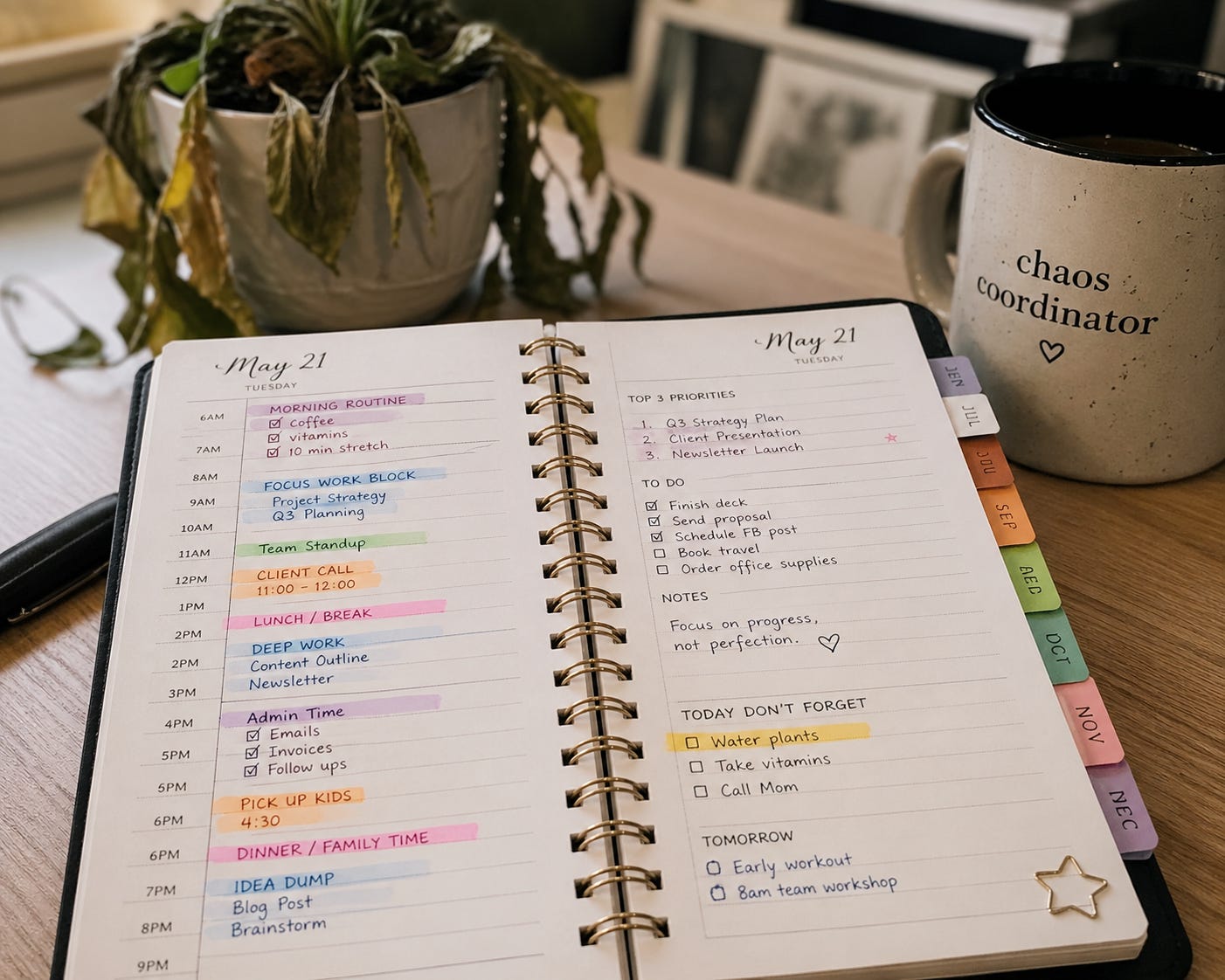
Even this Substack was impulsive.
But impulsive does not automatically mean careless.
Sometimes strategy is just recognizing when overthinking becomes procrastination wearing a blazer.
You can study every outcome. Build every contingency. Make color-coded timelines. Develop milestone trackers. I say this as someone who literally does organizational strategy work for a living.
And still, eventually, there’s a point where you just have to move.
Not recklessly.
Not blindly.
Just… willingly.
Because life is deeply inconvenient in that it refuses to provide full certainty before decisions.
Rude, honestly.
I think that’s the tension I live in constantly:
wanting enough information to feel prepared while also knowing that some of the best parts of life happened because I stopped trying to control every variable.
Which is unfortunate news for people like me.
And probably why my Amazon cart, garden plans, financial spreadsheets, parenting philosophy, and random late-night creative projects all somehow exist in the exact same ecosystem.
Strategy and impulse aren’t opposites.
Sometimes impulse is just strategy that finally got tired of waiting.
“Sometimes impulse is just strategy that finally got tired of waiting.” That line hits deep.